
Even as communities battle historic floods, droughts, and storms, a new climate threat is taking center stage. The rapid expansion of data centers across the U.S. now poses an alarming new risk to community health, climate commitments, and stable electricity rates for customers.
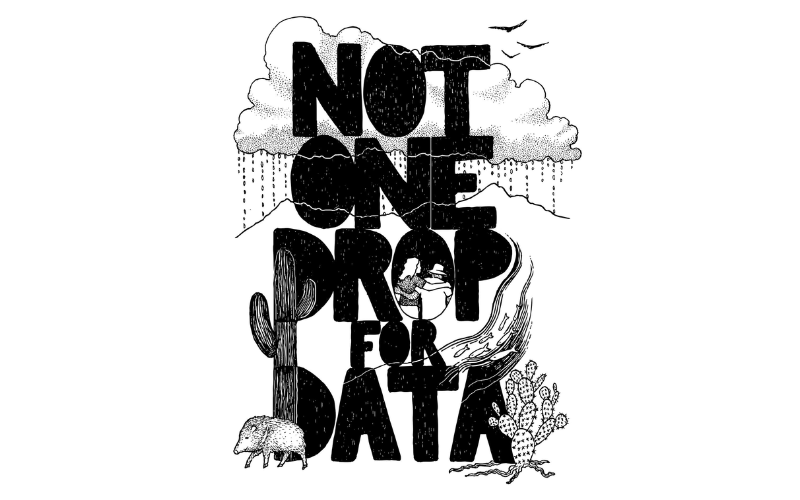
Image Credit: Maria Renée Johnson
Corporations are rushing to build massive centers to house IT infrastructure for the AI industry, often relying on unregulated fossil fuel generators. Secretive nondisclosure agreements with local authorities can keep local communities in the dark about the potential for electricity price spikes, the loss of ground water, significant increases in air pollution, and heavy industry invading quiet neighborhoods.
By some estimates, data center energy consumption is set to exceed 6-12% of U.S. electricity generation by 2030, reversing a decade of climate progress as coal plants are forced to stay online, and new methane gas power plants are approved by regulators. Three of the dirtiest, oldest coal plants in the country—Scherer, Brown, and Daniel—are planning to stay open far longer due to data centers. The cost of powering these huge facilities is often passed on to utility customers, leading to potentially large rate increases.
Data Centers Are Causing Price Spikes In Electricity
The national average cost of electricity is rising rapidly, about 25% since 2020. Existing data centers routinely consume 100 megawatts (MW), and a data center in Nevada, already using 250 MW in service, plans to expand consumption to 600 MW, the amount of electricity mid-sized Raleigh, NC uses.
At Third Act, Working Groups across the country have been organizing to stop these dirty projects in their communities, and fighting for clean energy solutions to rapidly increasing electricity demands with fossil fuel expansions. The good news is that using solar to generate electricity is demonstrably cheaper, can be built faster, and provides more predictable, stable rates than methane gas plants. Over the coming months, we’ll be sharing opportunities to take action around data centers locally and in your state. Although we are up against a Goliath, all is not lost! Third Act Arizona is showing us how it’s done.
Third Act Arizona Pitches In to Defeat Project Blue Data Center
Project Blue was a proposed $3.6 billion data center complex in Pima County, southeast of Tucson, Arizona. Residents first became aware of this project that had been shrouded in non-disclosure agreements (NDAs) on June 17, 2025 when Pima County announced the sale of 290 acres of land. Details slowly emerged from this deal including the leak that Amazon would run it. The project was not a done deal because the City of Tucson had to agree to annex the land so that they could deliver potable water and build an 18-mile reclaimed water pipeline to connect the site to Tucson Water’s municipal water system.
Data Centers Use A Lot of Water
“Not one drop for data,” soon became the rallying cry as a big corporation threatened Tucsonans’ water supply, energy grid, beautiful Sonoran Desert, and future. No Desert Data Center (NDDC) coalition formed quickly magnifying the voices of all. Educators, tech workers, laborers, scientists, musicians, Indigenous and First Nations people, retail and service workers, lawyers, healthcare workers, artists, union members, journalists, small business owners, water policy experts, ecologists and more were all welcome. Artists did an amazing job connecting the public to the issues. Individuals brought their expertise, lived experiences, and networks into the fight.
Third Act Arizona Steps Up To The Plate
This is where Third Act Arizona got involved. Co-facilitator Betsy Wilkening joined an information and postcarding session provided by Watershed Management Group and NDCC. Betsy is a 5th generation Arizonan. Her ancestors first occupied lands of the Tohono O’Odham and Yaqui people in Tucson under the Mexican flag. She also managed a water education program who received funding from Tucson Water. Like so many Third Act members, her lived experience and networks put her in a perfect position to research and draft a letter to the Mayor and Council that was approved by the Third Act Arizona coordinating committee and shared with members. It outlines concerns about water, energy, jobs and climate.
Read more on Third Act Arizona’s blog.
Third Act Arizona Won This Battle, But We Must Stay Vigilant
Tucsonans packed the three information sessions provided by the City and developer, loudly voicing their concerns. On August 6th, a mere seven weeks after the public first learned of Project Blue, Tucson’s City Council unanimously defeated the project 6-0 during a study session. People gathered after the vote for a celebration in 112℉ heat. Attendees were reminded that data center proposals will continue, but the power of the people can prevail when we all work together.

Nancy LaPlaca
Nancy LaPlaca (she/her), J.D., is an Energy and Climate Policy Consultant for Third Act’s Power Up Communities Campaign. She has 40 years of public policy experience, including 19 years of professional experience in electric/gas utility issues. Nancy has served as Policy Advisor to an elected Public Utilities Commissioner (Arizona, 2009-13), and was a public interest intervener at state-level public utilities commissions in AZ, CO and NC.
Her areas of expertise include coal, natural gas, power plants, net metering, rate cases, renewable portfolio standards, and a wide range of electric, gas, and water utility dockets in a half dozen states.
Share This


Ways to get involved
All the different ways you can get involved with Third Act:


