Dear Decaturish — Southern Company subverts our solar rights
- Updated
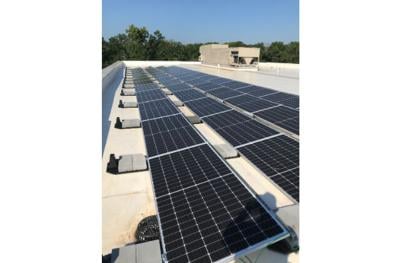 USED FOR ILLUSTRATION PURPOSES: The solar panels installed at Talley Street Upper Elementary. Image provided to Decaturish.
We accept letters to the editor. Letters to the editor are opinions of the authors of the letter, not Decaturish.com. Everyone has an equal opportunity to submit a letter to the editor. All letters must be signed and are typically between 500 and 800 words. We reserve the right to edit letters for length and content. We also reserve the right to publish longer letters. To send your letter to the editor, click here.
Dear Decaturish,
Solar energy costs have fallen 90% in the last decade! And just as rapidly as costs have declined, adoption of solar has grown exponentially across the US and world. In 2025, 90% of all new electricity capacity came from renewables, with solar making up approximately 54% of all new generation, and in May of 2026 solar surpassed coal in the U.S. energy mix.
And solar isn’t just the cheapest source of energy ever invented; it’s also flexible, safe, reliable, low maintenance, fast to deploy, low water use, passive (ie. no moving parts, noise or emissions) and there is no fuel required; the environmental and economic benefits of which cannot be overstated.
But perhaps most significantly, solar democratizes energy by allowing any of us to buy our own “power plant” to lower electric bills and enjoy the returns on that investment for ourselves (solar systems typically pay back 2-3 times their cost over their lifetime). And while solar has traditionally only been an option for folks who own a sunny roof, today Community Solar and “balcony solar,” where allowed, provide anyone – even renters- the opportunity to take advantage of cheaper solar energy and take a bite out of ever-growing power bills. Rooftop solar can also allow schools, churches, non-profits and other beneficial organizations to produce their own electricity and save significant money!
So why then do you suppose – that even as technology continually improves, costs fall and solar adoption proliferates – our abundantly sunny state has a paltry 0.7% of Georgia rooftops with solar panels producing just 0.4% of Georgia’s electricity – particularly since Georgia is arguably the solar manufacturing capitol of the US?
The obstacles aren’t technical or economic, they’re political – and at the center of these obstructive politics is the utility giant Southern Company, parent company of Georgia Power, Atlanta Gas Light, and much of the gas pipeline network that supplies our state and most of our power plants.
A brief history
More than 100 years ago, in the early days of building out the first power grids, it became apparent that in constructing such costly infrastructure it was not ‘capital efficient’ to have competing grids – and so the “regulated monopoly” was born. Despite monopolies being illegal to all other companies in the economy, electric utilities were granted exclusive service territories, captive customers and guaranteed profits in exchange for serving the public’s interest, not their own. And to ensure the public’s interest was central, Public Service Commissions were created to provide oversight.
Key too was the revenue model, which compensates utilities not for the power they sell, but through guaranteed returns on all money spent on infrastructure like power plants, poles & wires, substations, etc. This “cost plus” model is still in-force today and lies at the heart of fast-rising power bills: although renewables are the lowest cost power, Georgia Power is incentivized to build as much costly infrastructure as they can in order to maximize profits. This puts our monopoly utility squarely at cross purposes with affordability, clean energy, innovation and energy efficiency.
So how does this relate to our solar rights? Another huge benefit to rooftop solar is that when individuals own their own energy, they use less grid power, taking wear and tear off the system and along with it, the need for more fuel, power plants, poles and wires, backup Peaker Plants, and all the infrastructure from which Georgia Power derives its profits. Rooftop solar saves ALL ratepayers big money, but it’s bad news for Southern Company shareholders. This is the quandary we find ourselves in today, not only in Georgia but in many states.
Worse still, the profits the utility earns – out of our pockets – translate into huge political heft for them, which gets spent on lobbying efforts to stop the good policy that grows both solar adoption and the broader economy along with it. Policies like net metering (which mandates a fair rate for excess energy that solar customers supply back to the grid), Community Solar, Balcony Solar, and renewable portfolio standards (state goals for clean energy) are the most common policies that monopoly utilities fight against, few more aggressively than Georgia Power. In the 2026 Georgia legislative session alone, 20 bills to protect customers and promote solar energy were blocked!
The way forward
The current monopoly model was designed for the 20th century, when electricity flowed in one direction from large power plants to passive customers. Today’s distributed energy technology changes everything, and the ultimate answer lies in regulatory reform. Many states are already undertaking that process, and our electrified future still holds countless opportunities for the large utilities. The key in Georgia is to elect reformers to our legislature, and particularly to our Public Service Commission.
Remember in November.
— David Sillman