Data centers are going to use a hellacious amount of energy, and right now they’re serving as the latest excuse for the gas industry to pour yet more carbon and methane into the atmosphere. They are consuming land irresponsibly, land we need for solar panels and other clean energy infrastructure, not for yet another server farm in a water-stressed desert. Bernie Sanders’s call for a national moratorium, and his reasoning behind the moratorium, is exactly right: we need bargaining power, some leverage, so we’re not simply steamrolled by the same oligarchs who are working to dismantle our democracy.
In that sense, this fight rhymes with ones we’ve been in before: pipelines, LNG export terminals, and all the rest. The same developers, the same playbook, the same money.
But there’s an added dimension here that I think deserves naming. Some of you may have watched this past weekend as tech barons were booed at college commencements around the country, students refusing to be sold on AI by the very people building it. This technology has been described, almost entirely, as a tool for putting other people out of work and for ingesting the accumulated creative and intellectual output of human civilization without consent. I was amused and angered in equal measure to discover that some 15 of my own books had been fed into this machine — the product of decades of work, used as fodder for an experiment I never agreed to participate in.
So even as we think practically and politically about data centers, I’d encourage us to think philosophically too. The American Pope just released his first encyclical, and it’s on precisely these questions: artificial intelligence and its relationship to humanity. We are not alone in asking what this technology is actually for, and who it serves.
This fight is a distraction from the clean energy buildout we desperately need. But it’s a distraction we can’t avoid. I am extraordinarily proud of the Third Act members taking it on.
Let’s go.
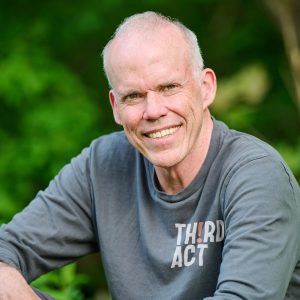
Bill McKibben
Bill McKibben is a founder of Third Act, which organizes people over the age of 60 to work on climate, democracy, and racial justice. He founded the first global grassroots climate campaign, 350.org, and serves as the Schumann Distinguished Professor in Residence at Middlebury College in Vermont. In 2014 he was awarded the Right Livelihood Prize, sometimes called the ‘alternative Nobel,’ in the Swedish Parliament. He’s also won the Gandhi Peace Award, and honorary degrees from 19 colleges and universities. He has written over a dozen books about the environment, including his first, The End of Nature, published in 1989. His most recently released book is The Flag, the Cross, and the Station Wagon: A Graying American Looks Back at his Suburban Boyhood and Wonders What the Hell Happened.
Share This


Ways to get involved
All the different ways you can get involved with Third Act: