The sun can provide us all the power we need.
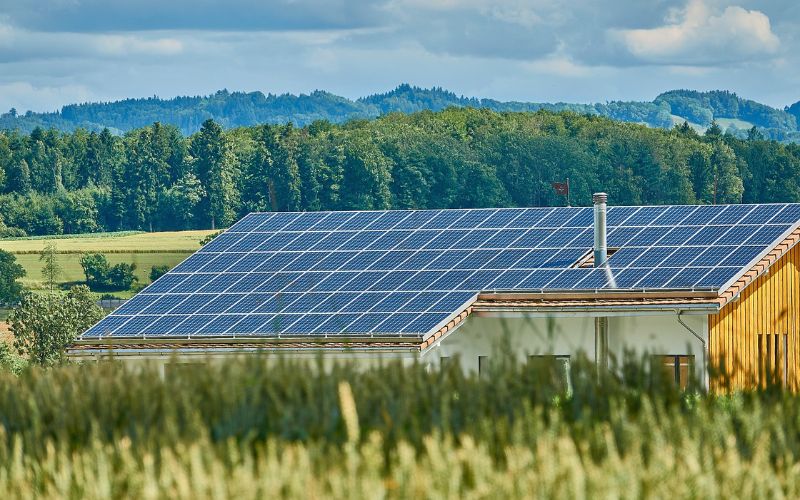
Solar power works—we now have states and countries proving every day that you can run modern economies on power from the sun and wind, and the batteries to store their power when the sun goes down or the wind drops.
Solar power is cheap—in fact, it’s the cheapest power we’ve ever seen on this earth, and getting cheaper by the month.
But there’s a third reason to be excited about solar energy—it’s profoundly liberating.
To understand what I mean, consider the alternative. Lay aside for the moment the fact that fossil fuel is wrecking the earth’s climate, or the fact that breathing the pollution it produces causes one death in five on this earth. (Those are big things to lay aside, but it’s only for a moment). Fossil fuel has another inherent quality that we need to think about: it’s only available in a few places around the world, where the biology of ancient times (all those plankton and ferns) piled up to create the deposits of coal and gas and oil on which we currently depend. In the real world, that means that the people who control those small and scattered deposits have way too much wealth and power—which they have used to dominate the rest of us.
In America, for instance, our biggest oil and gas barons were the Koch Brothers, and they took their winnings from the carbon casino and used them to degrade our democracy. (If you’re wondering how America ended up in the fix it’s in, look at their work over the last few decades). Or think about Vladimir Putin; were it not for oil and gas, he’d have no way to intimidate Europe and the world. Or think about the rulers of the Middle East, so awash in oil cash that they’re able to bribe our leaders with spare 747s. As Samuel Miller McDonald pointed out in his 2024 book Progress, as the 19th century began the richest one percent held just 8.5 percent of America’s wealth; by the time it ended, the top dogs had fifty percent of the money, “partly thanks to fossil fuels, which could be easily concentrated, controlled, and transformed into liquid capital by a small management class.”
It’s a fantastically profitable business—if you control those deposits of coal and gas and oil, then everyone else depends on you. That truck pulls into your driveway, the fat hose unrolls, your tank is filled, and you write a check. Forever.
Forever until…someone has a solar panel on the roof and a battery in the basement. Or until the grid to which they connect is powered by wind turbines and solar arrays. Once that happens, then the value of those deposits begins to dwindle rapidly (which of course explains why the fossil fuel industry is throwing so much money at our political system, in an attempt to delay that day). Just the way we talk about fossil fuel gives the game away: its owners hoard it “in reserves.”
But the sun isn’t like that. You can’t salt away sunshine or breeze in a tank beneath the ground—it’s everywhere, washing across the earth every day in quantities hundreds of times larger than we will ever be able to use. The sun already provides us with warmth, and with light, and with photosynthesis, and now it’s willing to provide us with all the power we need. All of us. Every state and every country has plenty of sun and wind (and hydropower) to do the job.
You can’t salt away sunshine or breeze in a tank beneath the ground—it’s everywhere, washing across the earth every day in quantities hundreds of times larger than we will ever be able to use. The sun already provides us with warmth, and with light, and with photosynthesis, and now it’s willing to provide us with all the power we need. All of us. Every state and every country has plenty of sun and wind (and hydropower) to do the job.
And that is profoundly liberating. Take my small state, Vermont: it spends about two billion dollars a year on fossil fuel. Since we don’t have any coal or gas or oil underneath our soil (thank heaven), that’s money we export to Texas or Saudi Arabia. In that, we’re like most of the world: eighty percent of humans live in countries that are net importers of fossil fuel, and hence exporters of cash that, if it stayed at home, would bolster our local economies. In one poor nation after another around the globe, the reason they face a “balance of payments crisis” is almost always linked to the price they have to pay to bring in the next shipload of diesel from abroad. (Right at the moment, by the way, the Trump administration is trying to deepen that dependence, using the threat of tariffs to “encourage” countries to sign up for liquefied natural gas (LNG) contracts.) Think of what Barbados or Senegal could do for schools and hospitals if they could be liberated from the need to pay for fossil fuel.
That means, of course, coming up with the one-time upfront cost of building the solar panels and wind turbines. In a working world, we’d be devoting our time, attention, and money to that task, because it’s the surest way of helping poor people, and also of heading off the worst of the climate crisis.
We remember the image of Gandhi with his spinning wheel, urging his countrymen to make their own clothes so they could be liberated from dependence on the mills of Britain, and we remember him teaching them to make salt so they could be liberated from the colonial monopoly. Were he alive today, he would be embracing the solar panel, because it offers the same kind of deep and powerful liberation.
If you want to upend the balance of political and economic power on this earth—and we should, because grotesque inequality is deeply wrong—then there is no place better to start than by changing the way we make electrical power. Turning to the heavens for our energy instead of to hell is a profoundly subversive act.
Go Solar with Third Act and EnergySage
At Third Act, we don’t just advocate for change—we make it happen. Now, you can take direct action on climate by exploring rooftop solar for your home with free, unbiased support every step of the way.
Learn More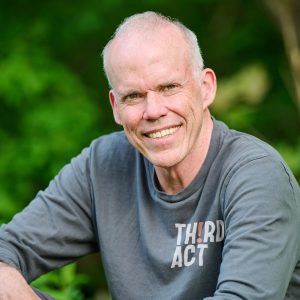
Bill McKibben
Bill McKibben is a founder of Third Act, which organizes people over the age of 60 to work on climate, democracy, and racial justice. He founded the first global grassroots climate campaign, 350.org, and serves as the Schumann Distinguished Professor in Residence at Middlebury College in Vermont. In 2014 he was awarded the Right Livelihood Prize, sometimes called the ‘alternative Nobel,’ in the Swedish Parliament. He’s also won the Gandhi Peace Award, and honorary degrees from 19 colleges and universities. He has written over a dozen books about the environment, including his first, The End of Nature, published in 1989. His most recently released book is The Flag, the Cross, and the Station Wagon: A Graying American Looks Back at his Suburban Boyhood and Wonders What the Hell Happened.
Share This


Ways to get involved
All the different ways you can get involved with Third Act: