With May Day right around the corner, it's time to think about how your local actions can bio
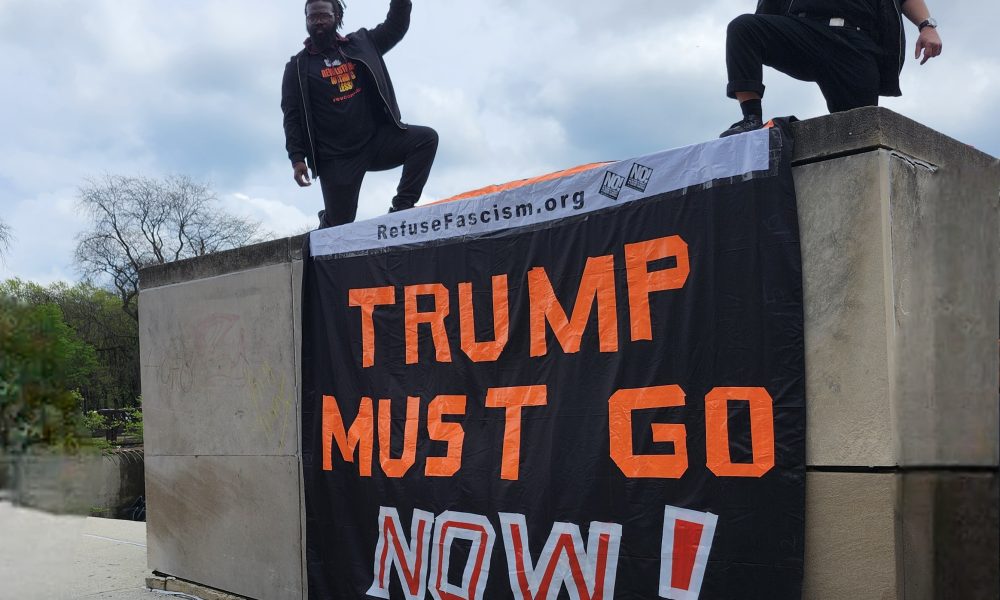
A general strike is not something that we decide to, it is something we build. I say this not to dampen our feeling of collective urgency but because the history is clear on this point. When I was in Wisconsin during the massive Act 10 protests against Scott Walker’s attacks on collective bargaining, there were people on the ground calling for a general strike. The energy was real. The anger was justified. But the infrastructure wasn’t there. The organizing hadn’t happened. You can’t ask people to do something they haven’t practiced, and Wisconsin hadn’t practiced it.
That’s what makes this moment so important. Every action we take right now — every march, every walkout, every business that closes for a day — is practice. It’s building the muscle memory that a sustained, large-scale resistance movement requires.
May Day Strong: The Next Test
The next major moment to flex that muscle is May Day, observed on May 1. The May Day Strong coalition is bringing together labor, grassroots organizations, and allies like Third Act around three core demands: tax the rich, so our families — not their fortunes — come first; ICE out, no private army serving authoritarian power; and expand democracy, not corporate power, which most centrally is premised on defending free and fair elections.
These demands connect directly to what happened in Minnesota in January, when nearly one in four Minnesotans participated in a one-day strike after ICE operations turned lethal in their communities. May Day is the next iteration of that experiment. It’s an important one, because we are collectively learning what it takes to organize at this scale.
That means being honest about the real challenges. Can workers afford to take the day off? Do they have paid time off? What are we asking of small businesses that are already operating on thin margins? These are exactly the kind of logistical questions that sustainable movements have to solve. The Montgomery Bus Boycott lasted nearly a year. It required carpools and strike funds and mutual aid and legal defense. None of that was improvised on the day.
What We’re Asking — and How to Help
The ask for May Day isn’t one-size-fits-all, and it shouldn’t be. The clearest form of participation is no work, no shopping, and withholding your economic power for a day as a concrete act of non-cooperation. But we know that not everyone can do that, and we don’t want perfection to be the enemy of participation.
For small businesses we love and trust: if closing for the day isn’t possible, there are other ways to stand with us. Host your space for people organizing local actions. Let your workers take the day off if they choose. Pledge to protect workers who face threats, including from ICE. Support their ability to participate, even if you can’t shut your doors.
For retirees and others not currently in the workforce: strike funds are one of the most direct ways to support workers who are sacrificing a paycheck to take action. The AFL-CIO and many individual unions maintain them. Showing up for the day before or the day after to support businesses that took a stand is another form of solidarity. And simply not spending money on May Day itself is something almost anyone can do.
The Longer Game
May Day is a step on a longer road. A lot of labor and grassroots organizations are looking toward the 2028 election as a target for the kind of mass, coordinated action that can really shift the balance of power. Getting there requires building the infrastructure now: the relationships, the communication systems, the mutual aid networks, the trust between organizations that makes it possible to move together at scale.
We also have to resist the temptation to be too hard on people who are still figuring out what they can do. Someone who has never been to a protest, never participated in a boycott, who shows up once and then goes home, we need to understand that’s not a failure. That’s a beginning. We are all learning how to do this together.
What we can do, right now, is keep building. Keep talking to people. Keep being the trusted voice in our communities that our friends and neighbors turn to instead of Fox News or Facebook. Keep showing up. And keep making it easy for one more person to join us.

Mike Johnson
Mike Johnson is the Democracy Campaign Manager at Third Act.
Share This


Ways to get involved
All the different ways you can get involved with Third Act: