Bill McKibben explains why we need a clean energy source that meets the moment—and why that source is in the sky and not on the ground.
Nuclear power is always an interesting question for environmentalists—it comes with both risks and benefits. I think those risks are fairly well understood, and I also think that in comparison with the guarantees of planetary destruction that come with the continued use of fossil fuels, they’re not deal-breakers. Yes, I wish we knew what to do with waste long-term, but yes: I’m also convinced that over time we’ll figure it out, and time is what we don’t have with climate change. So, since nuclear power plants make electricity without producing much in the way of carbon, they seem safer to me than gas or coal plants.
That said, I don’t think they’ll play a large role in the energy transition going forward, and that’s for one simple reason: price. As you know, the cost of generating energy with sun and wind has plummeted in recent years; we now live on a planet where the cheapest way to produce electricity is to point a sheet of glass at the sun. This is mainly the result of a steep learning curve—the more solar panels we make, the better we get at it. Nuclear power will probably never get big enough to get on this curve—indeed, a massive Oxford study a few years ago listed it as one of the very few technologies that gets more expensive over time.
…the cheapest way to produce electricity is to point a sheet of glass at the sun.
Perhaps, a few years out, we really will have affordable small modular reactors, and if we do then that may change the equation. But for now the keys to the energy transition are sun, wind, and batteries. They’re all available in bulk, at affordable prices. And they can be built really really fast—which is crucial, because we have to address the climate crisis really really fast. The IPCC has told us we need to cut emissions in half by 2030; nuclear power will play almost no role in that. But sun, wind, and batteries mean that California is using 40 percent less natural gas to make its power than it was two years ago. That’s magic.
Indeed, the real risk from nuclear power is that we will waste large sums of money on it—money that would clearly be better spent on putting up more solar arrays and wind turbines. This is precisely what the Trump administration is doing now, and I fear it’s a reflection mostly of the fact that there’s big money behind nuclear power.
I know that some people have a fondness for nuclear energy—often they’re engineers who have studied the basic elegance of the idea. To them I usually try to offer these consoling words: solar power is really best understood as a form of fusion, since it relies on the biggest nuclear reactor we know. But that reactor is a safe 93 million miles up in the sky, and it provides us with power for free!
Sun Day 2025: A National Day of Action
Learn More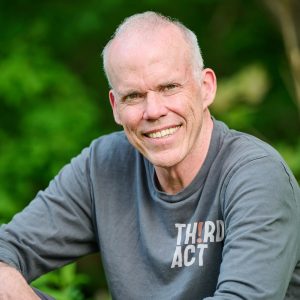
Bill McKibben
Bill McKibben is a founder of Third Act, which organizes people over the age of 60 to work on climate, democracy, and racial justice. He founded the first global grassroots climate campaign, 350.org, and serves as the Schumann Distinguished Professor in Residence at Middlebury College in Vermont. In 2014 he was awarded the Right Livelihood Prize, sometimes called the ‘alternative Nobel,’ in the Swedish Parliament. He’s also won the Gandhi Peace Award, and honorary degrees from 19 colleges and universities. He has written over a dozen books about the environment, including his first, The End of Nature, published in 1989. His most recently released book is The Flag, the Cross, and the Station Wagon: A Graying American Looks Back at his Suburban Boyhood and Wonders What the Hell Happened.
Share This


Ways to get involved
All the different ways you can get involved with Third Act: