
As part of Third Act’s Responsible Finance efforts to provide educational resources about fossil-free banking options, this blog shares information about how you can join a credit union that invests in clean energy with as little as $25.
Please note: Third Act is a non-profit educational, organizing, and advocacy organization. We are not investment advisors and are legally prohibited from providing investment or financial advice. The information Third Act provides around Responsible Finance options is for educational purposes. Third Act does not offer advisory or brokerage services, nor does it recommend or advise investors to buy or sell particular stocks, securities or other investments. Financial choices are your personal decisions. You can learn more about our Banking on our Future initiative and read our FAQs about finding better banking and credit card options.
In 2023, Third Act launched our “Banking on our Future” campaign and delivered tens of thousands of pledges to the top four US banks to demand that they stop bankrolling climate destruction. We made some progress on pushing banks to adopt voluntary climate commitments, but those are now being eroded in the current political context. Yet we still have individual agency and can take action to align our money with our values: we can move our money and investments out of dirty banks and into better banks and credit unions. Third Act has been sharing resources and information about “Responsible Finance” options as part of our campaign.
As Third Act organizes for Sun Day on September 21, 2025—a national weekend of action to celebrate and scale-up for clean energy—I spoke with Nicole Burford of the Clean Energy Credit Union to learn how people can find banking services that support climate action.
Deborah Moore Question: What’s the problem with big banks and climate change?
Nicole Burford, Clean Energy Credit Union: Well, for many of us, we often don’t know what our money is supporting. We open a bank account in our teens or share one with a spouse and may not give much thought to it as long as our funds are there and our cards swipe. But the truth of the matter is that financial institutions use your deposits to fund their loans and investments, often fueling the climate crisis. In fact, according to Banking on Climate Chaos 2025 Report, the 65 biggest banks globally committed $869 billion to companies doing business in fossil fuels in 2024 alone, nearly half of which went to companies expanding fossil fuel production. Depending on where your money is deposited, your bank could be funding projects such as pipeline and coal power expansion or new oil and gas exploration.
DM: At Third Act, we share resources about how to find a better bank or credit card. What is a credit union? Why is it different than a typical bank?
NB: Unlike banks owned by shareholders, credit unions are not-for-profit cooperatives that are democratically owned and controlled by members. Credit unions are designed to serve their “field of membership” (FOM), a specific group of individuals who share a common bond. For most credit unions, this is typically defined by where you live (such as a specific state or city) or where you work.
DM: And so what is different or unique about Clean Energy Credit Union?
NB: At Clean Energy Credit Union, our members are united by a shared mission to promote clean energy and protect the environment. We really focus on funding clean energy; we have no fees; and we make it easy for anyone to join our credit union as a member. Our “Field of Membership” (FOM) includes individuals who are part of organizations aligned with these values: groups dedicated to clean energy, environmental stewardship, and diversity. This includes organizations like Green America, Solar United Neighbors, the Electric Vehicle Association, and many others.
DM: So how would someone join or become a member of Clean Energy Credit Union? I know where I live, I’d often have to be an employee at a public university or be part of a union. I’m not eligible to join many credit unions.
NB: That’s part of what makes it easier to join Clean Energy Credit Union. If you’re not already a member of one of the organizations I mentioned earlier, no problem! We can enroll you in Solar United Neighbors free of charge during your application, or you can choose to join any eligible group that aligns with your interests. You can see the full list of our partner organizations here.
DM: What kinds of services does Clean Energy Credit Union provide? Is it like a regular bank?
NB: Every product our credit union offers, from loans to deposit accounts, is designed to support environmentally sustainable choices. We are a fully online credit union. We offer a wide range of banking and financing products and benefits such as checking, savings, high-yield Certificates of Deposit (CDs), competitive financing rates for loans for solar systems, geothermal, efficient HVAC, financing for purchasing Electric Vehicles and eBikes. All of this with minimal fees: no account fees, no overdraft fees, and free in-network ATM withdraws. You can learn more about our interest rates and fee schedule (note that rates can change at any time).
With digital tools like online and mobile banking, access to thousands of MoneyPass ATMs, Coinstar Kiosks and participation in a nationwide shared branching network, our members enjoy convenient, coast-to-coast service without sacrificing personal connection or mission alignment.
As a Certified B Corp—the first credit union to get this certification—we are committed to supporting the financial health of our members through ethical, socially-conscious practices that prioritize transparency, fairness, and community empowerment. From the start, we have operated with a strong set of values—never charging NSF (overdraft) fees, avoiding courtesy pay programs, and offering low-minimum deposits. Guided by the principles of ethical banking, we strive to reduce costs, provide equitable access to credit, and offer financial products that help our members achieve their goals. By eliminating predatory fees and focusing on long-term financial well-being, we aim to create a supportive environment where individuals and communities can thrive.
DM: So, let’s talk details. How can someone become a member and open an account?
NB: Begin by completing an application on our website. You can start with as little as a $5 deposit in your savings account or $25 opening deposit for a rewards checking account. You can also check out our Frequently Asked Questions.
DM: Thank you so much, Nicole, for sharing about the mission and banking services of the Clean Energy Credit Union. As we work to speed up and scale up more clean energy and climate solutions, it sounds like your credit union is one way that people anywhere can help put their money to work for good. Any last words?
NB: Thank you for the opportunity to chat with you. We appreciate Third Act’s Responsible Finance educational resources and are pleased to offer one more option for ways individuals may align their money with their values.
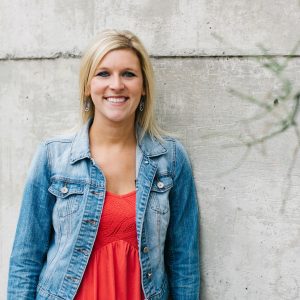
Nicole Burford
Nicole is the VP of Market Development and Sustainability at Clean Energy Credit Union. At Clean Energy Credit Union, Nicole oversees and leads the development of company-wide sustainability and marketing practices. Nicole implements programs to increase the awareness of the credit union’s mission, while also fostering relations with the communities we serve. She is involved in a variety of environmental organizations and is happy to be working for a not-for-profit business that is helping to combat climate change and create a more sustainable future.

Deborah Moore
Deborah is a Campaign Strategist here at Third Act and co-lead of Sun Day. Her background is as an environmental scientist, with expertise on water and energy, and as a campaign manager and organizer, previously with the Union of Concerned Scientists, Green Schools Initiative, and Environmental Defense Fund. She has saved rivers and protected communities around the world; helped pass 100% clean energy and climate laws in California, Oregon, and Washington; co-founded an all-volunteer voter registration organization and helped pass vote-by-mail laws. She’s married and has one daughter, and recently became a grandmother.
Share This


Ways to get involved
All the different ways you can get involved with Third Act:


